How to Get Mould Off a Washing Machine Seal, Step by Step
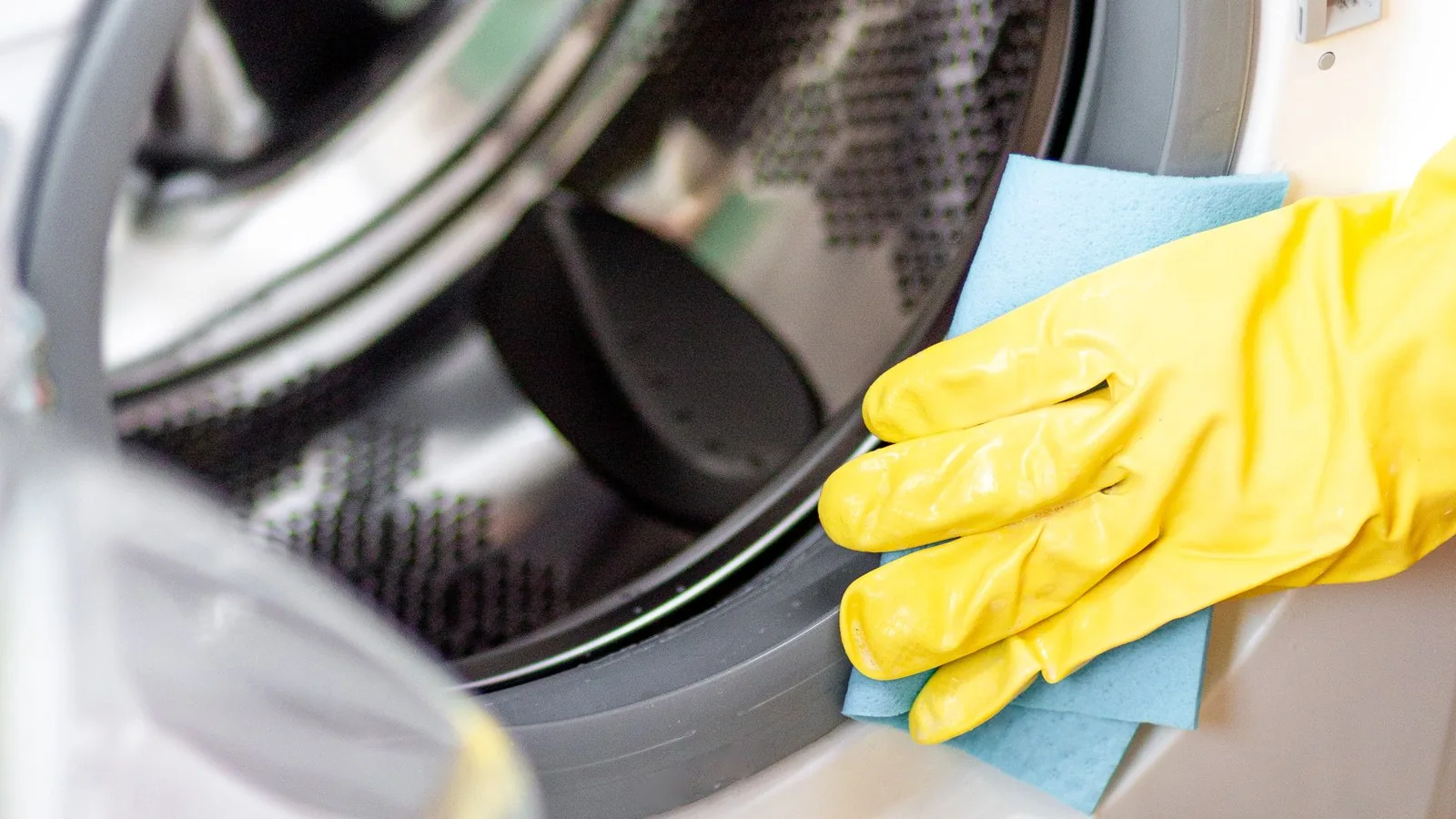
The black gunk on your washing machine's door seal is the most common mould complaint in the house, and the most commonly botched. People scrub the visible lip, declare victory, and the black is back in a month. That's because the visible lip is the show. The real colony lives inside the fold of the gasket, in the drainage channel that stays wet between washes and never sees light. Clean the fold or don't bother.
What you need
- A mould gel with a brush applicator. The Kilrock gel is our pick for this exact job; the brush reaches where a nozzle can't.
- Rubber gloves and an old cloth or two you're willing to bin.
- An open window or a door to the room. This is a bleach product in a small space near your face.
Read the bleach safety basics first, especially the part about never mixing products. A washing machine drum can hold residue of whatever you ran through it last.
The method
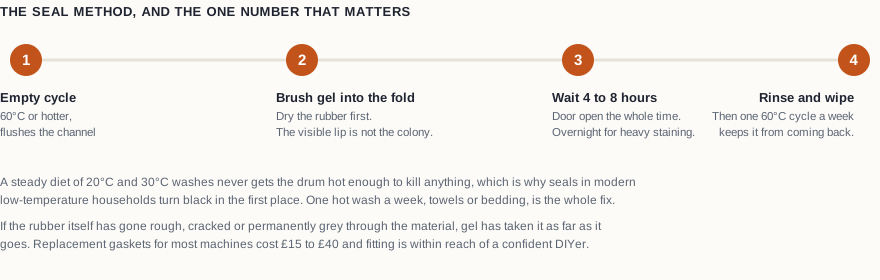
- Run the machine empty and hot first. A 60°C or hotter empty cycle flushes detergent residue and loose grime out of the seal channel so the gel meets mould, not sludge.
- Dry the seal. Wipe the whole gasket with a dry cloth, including inside the fold. Gel grips dry rubber far better than wet.
- Peel back the fold. Gently pull the inner lip of the gasket towards you. You'll see the channel, and probably the worst of the staining. This is normal and it's why previous attempts failed.
- Brush gel onto every stained surface. Work it into the fold, around the full circumference, and onto the visible lip. Be generous on the black patches. Keep gel away from the drum's metal face as much as practical.
- Leave it 4 to 8 hours with the door open. Overnight is fine. The open door matters twice: contact time for the gel, and no fumes trapped in the drum.
- Wipe out thoroughly, then rinse. Remove all visible gel with a damp cloth, then run another empty hot cycle to rinse residue out of the machine before the next load of clothes.
Heavy, old staining sometimes needs a second round. If the rubber itself has degraded, gone rough, cracked or permanently grey through the material, gel has taken it as far as it goes; replacement gaskets for most machines cost £15-40 and fitting is a job a confident DIYer can do with a video and patience.
Keeping it clean, which is the actual fix
Mould grew in the seal because the seal stays wet and dark. Change that and the gel becomes a once-a-year product instead of a subscription:
- Leave the door ajar between washes. This is the single biggest fix. A closed drum is a sealed humidity chamber.
- Leave the detergent drawer open too, and pull it out to dry occasionally. It's the second favourite mould habitat.
- Wipe the seal fold dry after the last wash of the day. Ten seconds with the towel you just washed.
- Run a hot wash regularly. A steady diet of 20°C and 30°C cycles never gets the machine hot enough to kill anything. One 60°C cycle a week, towels or bedding, does.
- Don't leave wet washing sitting in the drum. Every hour it sits is a humidity session for the seal.
Same logic applies everywhere else in the house, and we cover the room-scale version in preventing mould coming back.
Check Kilrock gel price on Amazon Back to the full roundup